
 |
||
 |
||
 |
||
 |
||
 |
||
 |
||

Because of the heavy use of antibiotics, oral contraceptives, animals fed antibiotics, changes in the food supply, medical interventions, and lifestyle issues, there has been an alarming increase in mycotic (yeast) infections of many types [1]. Contrary to popular belief, it is not necessary to have a vaginal yeast infection to have yeast-related problems like diarrhea, reflux (like GERD), eczema, itchy red patches etc. [2,3]. Vaginal yeast infections, also are problems [2], and have also responded to nutritional interventions [1,3,4].
Yeast and fungal infections can also cause itching, discomfort, and a variety of skin complaints like rashes, eczema, psoriasis, dry skin patches, intense itching, hives, and open cut-like sores [1,2]. They also may be an unfound factor when people have weight problems or when they seem to have multiple “food allergies” [1].
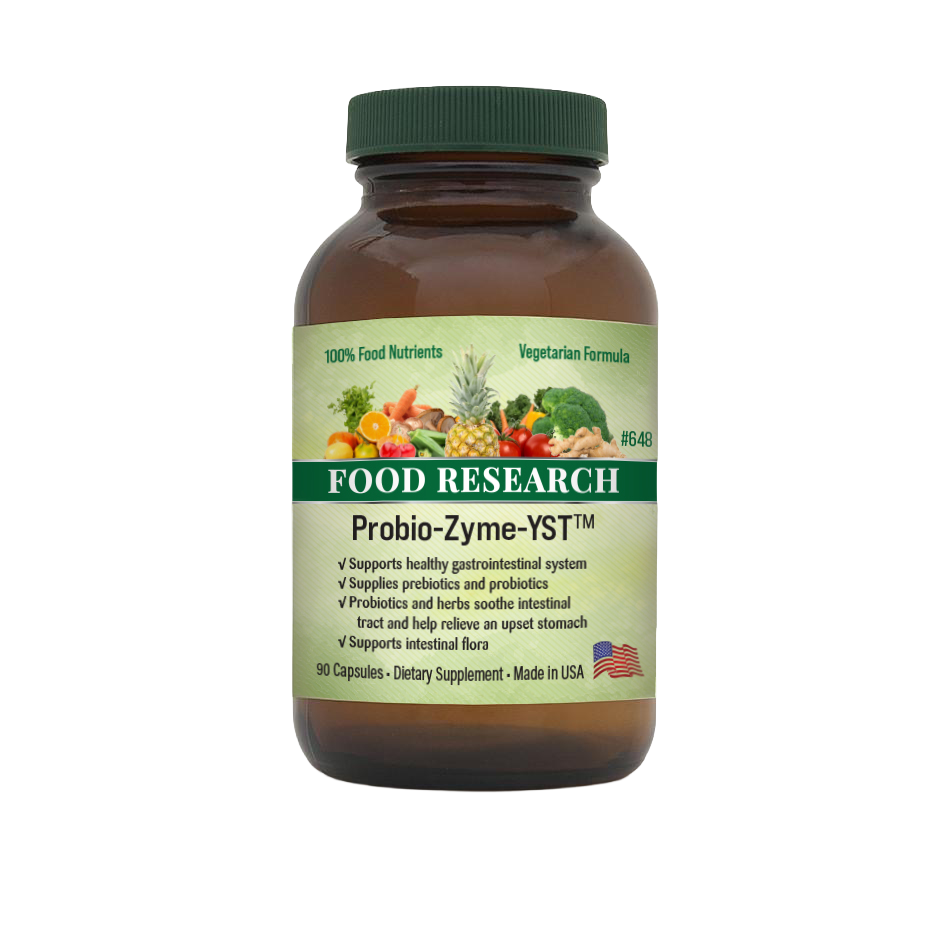
Probio-Zyme-YST contains a variety of prebiotic, probiotic, and anti-fungal herbal ingredients. Products like it have long been used as intestinal detoxificants [4,5]. Combining pre- and pro-biotics seems to enhance effectiveness [6].
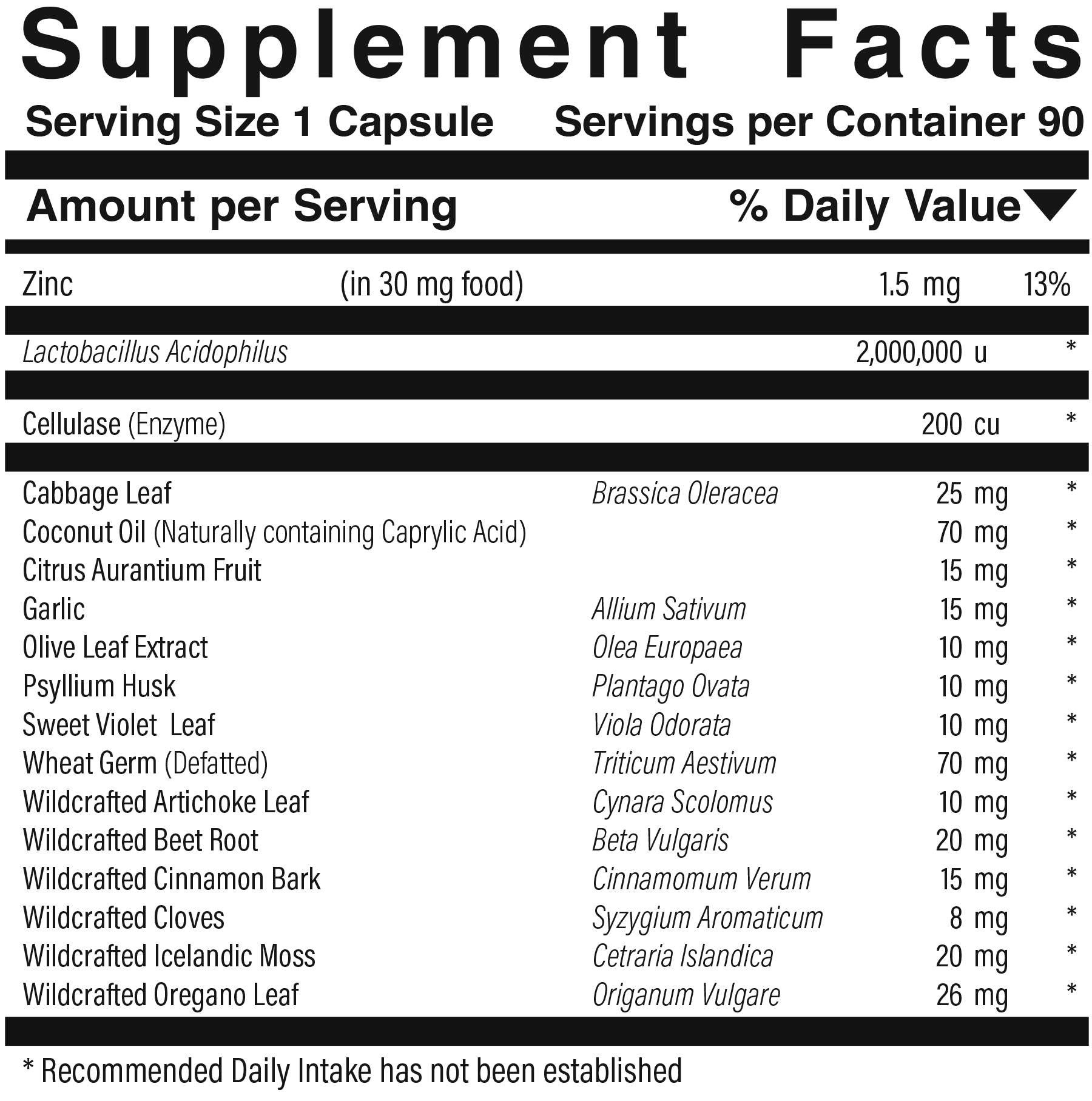
Other Ingredients: Silica, Vegetarian (HPMC) Capsule.
Suggested use: Serving size or as recommended by your health care professional. Adjust usage according to nutritional lifestyle requirements.
It has been claimed that, “The most common cause of diarrhea is inflammation of the intestines due to bacterial or mycotic action. The latter frequently as the result of antibiotic therapy which disturbs the symbiotic relation between fungi and bacteria. The irritation causes a hypertonic reflex action and peristalsis is increased until the cause is removed. Loss of body fluids may occur during its course” [7].
Probio-Zyme-Yst contains the following ingredients to help support a healthy gastrointestinal system.
Artichokes contains inulin that has “health-promoting prebiotic effects” [8]. In other words it “feeds” the good probiotics and improves that “portion” of the immune system.
Beet root contains substances, like fiber and natural sugars [9], that can have prebiotic properties. It has long been used in yeast-type formulas [5].“Cabbage protects the mucous membrane of the stomach from gastric hydrochloric acid…attributed to…vitamin U [10].
Cellulase digests cellulose [4].
Digested cellulose acts as prebiotic material and hence helps increase
the probiotics in the body. “Cellulase is used as a digestive
aid...and for the management of flatulence [4].
Cinnamon has antimicrobial and antifungal properties [11].
Citrus Aurantium Fruit “is highly effective against viruses, protozoa, bacteria, and yeast” [12]. “Clove
oil is used internally for stomach ulcers…halitosis…flatulence, colic,
gastropathy, and anorexia” [10]. It has “demonstrated
antimicrobial activity towards Candida albicans” [10].
Coconut Oil
naturally contains Caprylic Acid which has antifungal properties [2]. Caprylic acid given orally by
capsule antagonizes Candida colonization of the small intestine
[13].
Garlic is “used for gastrointestinal aliments, particularly digestive disorders with flatulence and gastrointestinal spasms…and as a tonic for diverse illnesses and debilities” [10].
Icelandic Moss has been traditionally used as an herbal remedy for many conditions such as... indigestion and other conditions. Studies indicate bioactive substanes in Inclandic moss may have antioxidant, antimicrobial, anti-inflammatory, antiemetic and soothing properties [14]
Lactobacillus acidophilus: “Lactobacilli are the predominant microorganisms of the vaginal bacterial microbiota, and they play a major role in the maintenance of a healthy urogenital tract” [15]. Lactobacillus acidophilus has been shown to effectively treat chronic diarrhea [16]. Lactobacilli, such as in Probio-Zyme-YST are normally preferable for supplementation and are also used for those with vaginal yeast infections and vaginal bacterial infections [7].
Olive Leaf Concentrate, Oleo europaea ,is a remarkable herb. Olive leaf compounds have successfully repelled the growth of Candida albicans, Escherichia coli, Klebsiella pneumoniae, Bacillus cereus, Aspergillus flavus and Aspergillus parasiticus [17,18]. Psyllium has been found to be useful for chronic constipation and some forms of diarrhea [10].Sweet Violet Leaf is a pansy-like flower that “has a soothing, salvelike effect due to its mucin content: in animal experiments, oral administration brought about an improvement of eczema-like skin conditions after long-term use” [8]. It is specifically indicated for vaginal itching [10]. Recent research has concluded that it may have anti-inflammatory properties [19].
Wheat germ can be helpful as: “ingestion of probiotics and wheat germ assists in parasite clearance” [20]. Wheat germ seems to possess one or more elements that have antifungal properties [21,22].Wild Oregano Oil, Origanum vulgare, has
been reported to have effectiveness against yeast infections ,
parasites [23], bacteria [24], and viruses [25]. “Origanum oil at 0.25
mg/ml was found to completely inhibit the growth of C. albicans in
culture…The results from our study encourage examination of the
efficacy of origanum oil in other forms of systemic and superficial
fungal”, especially with an olive extract [26]. “Psoriasis and
eczema may respond to” wild oregano [25]. “Essential oil of
Oregano inhibited Candida albicans growth…similar to that of Nystatin” [27].
As the
body begins to deal with dead microbes, one may experience a variety of
detox symptoms. Detox
“refers to symptoms generated by a detoxification process. This occurs when invading organisms die…Common
reactions include fatigue, diarrhea, headaches, muscle/joint achiness
or flu-like symptoms. Some people may develop a rash…The best way
to maximize the power of olive leaf extract and limit any adverse
reaction is to drink four cups of water in between usages.
Water helps to strengthen the lymphatic system and flush the
kidneys…Die-off effect is only temporary” [28]; this also can be true
for oregano and other substances. The body is designed to
normally heal itself, though even scripture sometimes credits edible
leaves (and even water, cf. John 5:4;7:38) as part of the
process. While a “detox” reaction is theoretically possible with
products such as Probio-Zyme-YST, they are not common.
Zinc supports the immune system and has been found to be helpful for certain types of diarrhea [4]. Unlike nearly all zinc-containing products, Probio-Zyme-YSTTM only contains food zinc in a food (Saccharomyces cerevisiae) that helps the body fight infection [10].
Probio-Zyme-YST Video
Probio-Zyme-YST Video
References
[1] Thiel, R. Systemic mycoses: An overview for natural health professionals. The Original Internist, 14:2, June 2007:57-66
[2] Hendler SS, Rorvik D, eds. PDR for Nutritional Supplements. Medical Economics, Montvale (NJ), 2001
[3] Balch JF, Balch PA. Prescription for a Nutritional Healing.
2nd ed. Avery Publishing Group, Garden City Park (NJ), 1997
[4] Lee R. Zymex. In Product Bulletins, circa 1950
[5] Fujimori S, Tatsuguchi A, Gudis K, Kishida T, Mitsui K, Ehara A,
Kobayashi T, Sekita Y, Seo T, Sakamoto C. High dose probiotic and
prebiotic cotherapy for remission induction of active Crohn's
disease. J Gastroenterol Hepatol. 2007 Aug;22(8):1199-204
[6] Budvari S, et al eds. The Merck Index, An Encyclopedia of
Chemicals, Drugs, and Biologicals, 12th ed. Merck Research
Laboratories, Whitehouse Station (NJ), 1996
[7] Lee R. Diarrhea. Therapeutic Food Manual. Circa 1950
[8] López-Molina D, Navarro-Martínez MD, Rojas Melgarejo F, Hiner AN,
Chazarra S, Rodríguez-López JN. Molecular properties and
prebiotic effect of inulin obtained from artichoke (Cynara scolymus
L.). Phytochemistry. 2005 Jun;66(12):1476-84
[9] Beets, raw. USDA National Nutrient Database for Standard Reference, Release 19, 2006
[10] Gruenwald J, Brendler T, Jaenicke C, editors. PDR for Herbal
Medicines, 4thd ed. Thomson Healthcare, Montvale (NJ), 2007
[11] Ooi LS, Li Y, Kam SL, Wang H, Wong EY, Ooi VE. Antimicrobial
activities of cinnamon oil and cinnamaldehyde from the Chinese
medicinal herb Cinnamomum cassia Blume. Am J Chin Med.
2006;34(3):511-522
[12] Strohecker J, ed. Alternative Medicine, The Definitive
Guide. Future Medicine Publishing, Fife (WA), 1995
[13] Ely JTA. Hypochlorhydria and multiple organ failure: A
leading cause of death in the Intensive Care Unit. J
Orthomol Med, 2004;19(1):11-20
[14] MedicineNet, https://www.medicinenet.com>iceland_moss>article Iceland moss, Medical Reviewers: Sarforoj K BHMS, PGD Health Operations, Oct 2026
[15] Zarate G, Tomas MS, Nader-Macias ME. Effect of some
pharmaceutical excipients on the survival of probiotic vaginal
lactobacilli. Can J Microbiol. 2005 Jun;51(6):483-9
[16] Gaon D, Garmendia C, Murrielo NO, de Cucco Games A, Cerchio A,
Quintas R, Gonzalez SN, Oliver G. Effect of Lactobacillus strains
(L. casei and L. Acidophillus Strains cerela) on bacterial
overgrowth-related chronic diarrhea. Medicina (B Aires).
2002;62(2):159-63. Xiao SD, Zhang DZ, Lu H, Jiang SH, Liu HY,
Wang GS, Xu GM, Zhang ZB, Lin GJ, Wang GL. Multicenter, randomized,
controlled trial of heat-killed Lactobacillus acidophilus LB in
patients with chronic diarrhea. Adv Ther. 2003
Sep-Oct;20(5):253-60
[17] Aziz NH, Farag SE, Mousa LA, Abo-Zaid MA. Comparative
antibacterial and antifungal effects of some phenolic compounds.
Microbios. 1998; 93(374): 43-54
[18] Markin D, Duek L, Berdicevsky I. In vitro antimicrobial activity of olive leaves. Mycoses.2003; 46(3-4): 132-136
[19] Toiu A, Pârvu AE, Oniga I, Tămaş M. Evaluation of
anti-inflammatory activity of alcoholic extract from Viola
tricolor. Rev Med Chir Soc Med Nat Iasi. 2007 Apr-Jun;111(2):525-9
[20] Hawrelak J. Giardiasis: pathophysiology and management. Altern Med Rev. 2003 May;8(2):129-42
[21] Caruso C, Chilosi G, Leonardi L, Bertini L, Magro P, Buonocore V,
Caporale C. A basic peroxidase from wheat kernel with antifungal
activity. Phytochemistry. 2001 Nov;58(5):743-50
[22] Ciopraga J, Gozia O, Tudor R, Brezuica L, Doyle RJ. Fusarium
sp. growth inhibition by wheat germ agglutinin. Biochim Biophys
Acta. 1999 Aug 5;1428(2-3):424-32
[23] Hybrid protocols. Posit Health News. 1998 Fall; (No 17): 18-19
[24] Friedman M, Henika PR, Mandrell RE. Bactericidal activities of
plant essential oils and some of their isolated constituents against
Campylobacter jejuni, Escherichia coli, Listeria monocytogenes, and
Salmonella enterica. J Food Prot. 2002;65(10):1545-1560
[25] Nevas M, Korhonen AR, Lindstrom M, Turkki P, Korkeala H.
Antibacterial efficiency of Finnish spice essential oils against
pathogenic and spoilage bacteria. J Food Prot. 2004;67(1):199-202
[26] Ingram C. Super-Market Remedies. Knowledge House, Buffalo Grove, IL, 1998
[27] Manohar V, Ingram C, Gray J, Talpur NA, Echard BW, Bagchi D,
Preuss HG. Antifungal activities of origanum oil against Candida
albicans. Mol Cell Biochem. 2001; 228(1-2): 111-117
[28] Concoby R, dir. The Olive Leaf: Unequalled Immune Support
for Health and Longevity, 5th printing. National Life Extension
Institute, Inc., Kent (OH), 1999
Some of these studies (or citations) may not conform to peer review standards. Therefore, the results are not conclusive. Professionals can, and often do, come to different conclusions when reviewing scientific data. None of these statements have been reviewed by the FDA. All products distributed by Doctors’ Research, Inc. are nutritional and are not intended for the treatment or prevention of any medical condition.
 |
||
|
||